![[Univ of Cambridge]](uniban-s.gif)

![[Dept of Engineering]](engban-s.gif)
![[DSL]](dslsmallest.gif)
click this  for a demonstration
| Experimental investigation | Micromechanical model | Phenomenological model |
A series of experiments were carried out on NiTi shape memory alloys.
These experiments include:
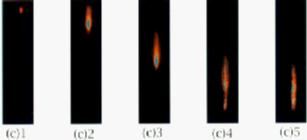
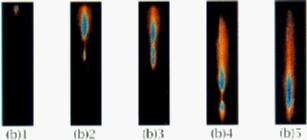
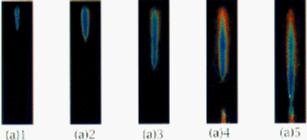
Transformation front movement in tension test at different strain rate was observed.
Transformation front movement
| strain rates | 1.30e-4/s | 2.60e-4/s | 1.30e-3/s |

|
 |
 |
 |
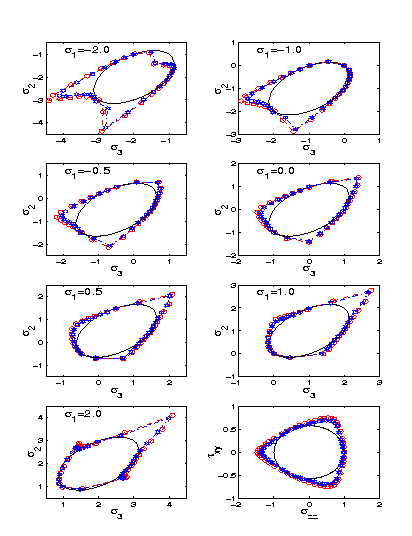
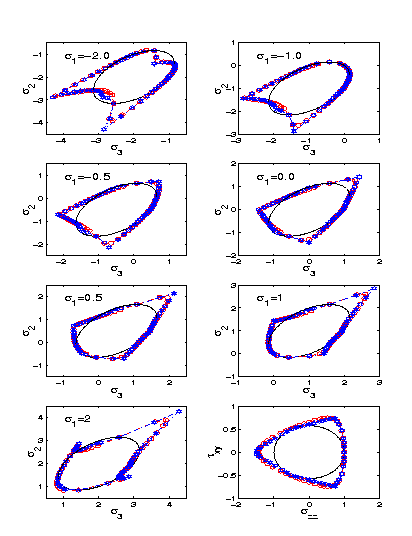
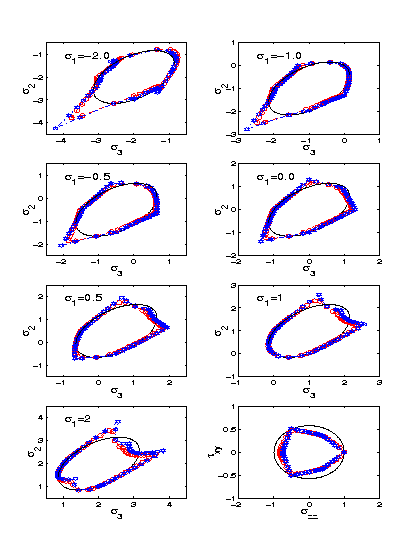
Behaviour of shape memory alloy was investigated based on micromechanic and phase transformation theory. Besides ordinary behavior,
Yielding surfaces of SMAs
| SMAs | NiTi | NiAl | CuAlNi | CuZnGa |
| yielding surfaces |
 |
 |
 |
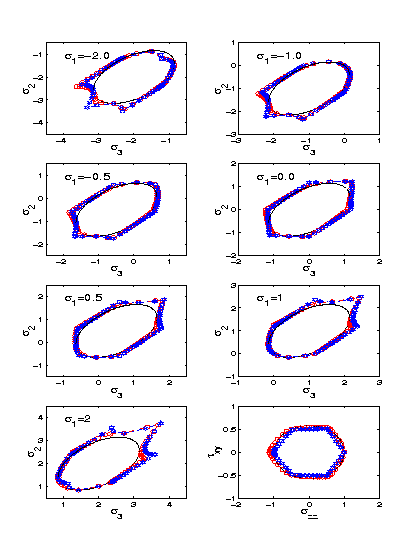 |
By using this Yielding surface theory,
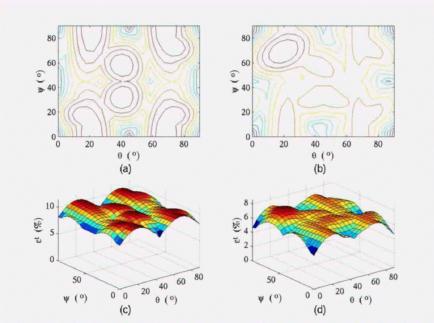
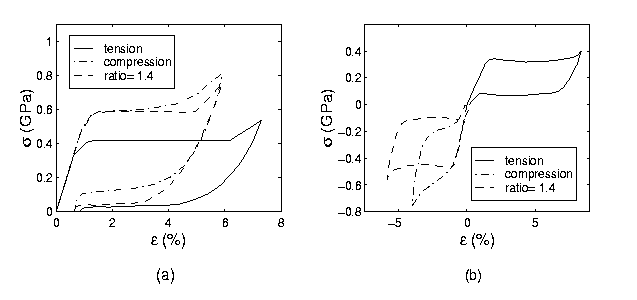
Maximum transformation strain in Nitinol crystals
| tension | compression |
 |
|
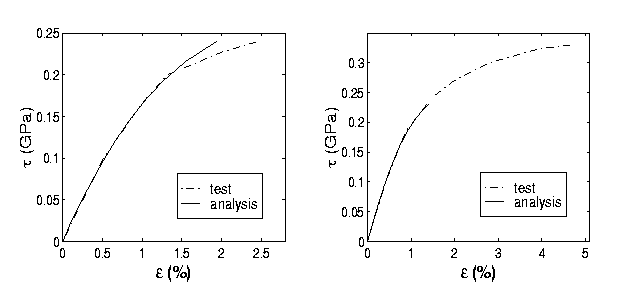
From tension to compression and torsion
| tension to compression | tension to torsion |
 |
 |
Further work in this field will lead to a real multi-dimentional model for real shape memory alloys.
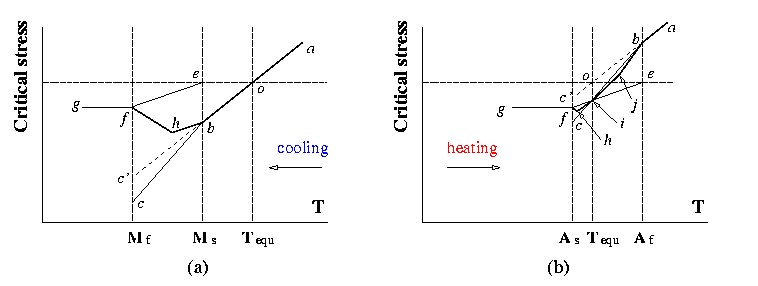
Yielding stress vs temperature
| in cooling process (a-o-b-h-f-g) |
in heating process (g-f-h-i-j-b-a) |
 |
|
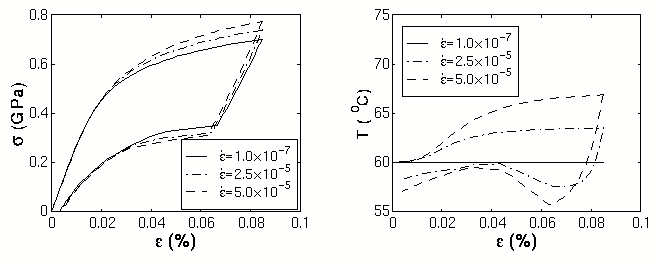
A phenomenological constitutive model based on two kinds of tests (the standard tension test, carried out at different constant temperature, and the thermal cycling test under different constant loads) were suggested for engineering applications (details of this model refer Technical Report).
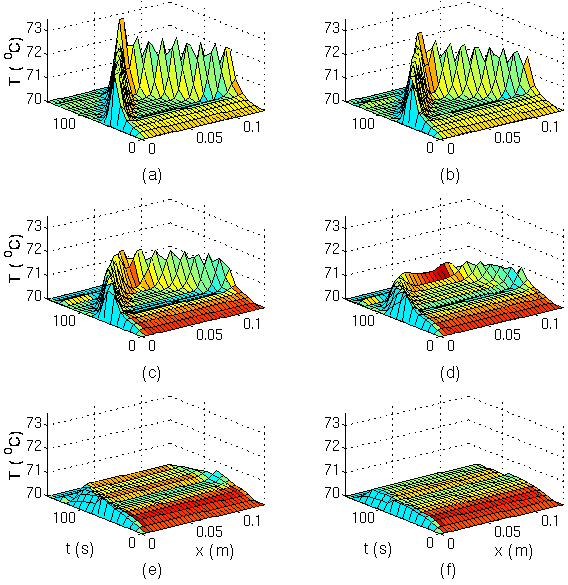
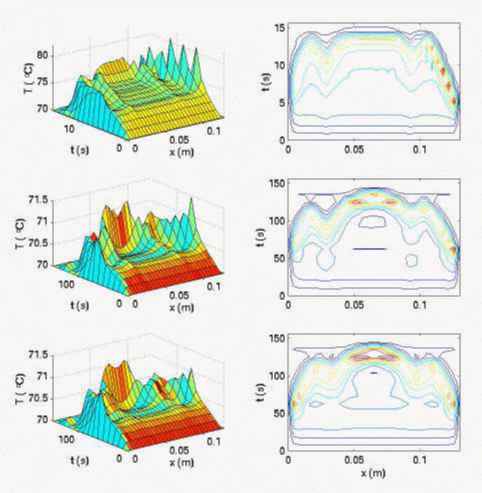
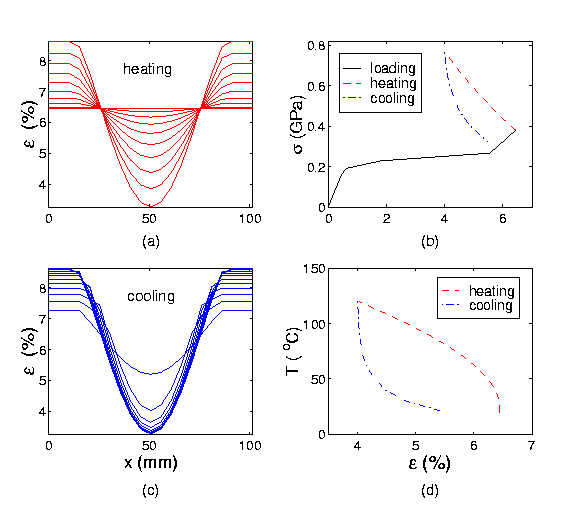
This phenomenological constitutive model has been used to simulate:
| strain rate effetcs | transformation front movement | thermal cycling (fixed length)+ |
|
| sample (1) | sample (2) | ||
 |
 |
 |
 |
(+ Temperature is
not uniform.)
and in shape memory alloy based Actuator designs (refer Publications).
Last updated on the 27th of March, 1998
W Huang - mwmhuang@ntu.edu.sg